
What Is Direct Trade Coffee Sourcing? A Complete Guide
Table of Contents
- What Is Direct Trade Coffee Sourcing?
- How Direct Trade Coffee Works: From Farm to Roaster
- Fair Trade vs Direct Trade Coffee: What's the Difference?
- The Benefits of Direct Trade Coffee for Farmers and Roasters
- The Role of Importers and the Supply Chain
- How to Verify Direct Trade Coffee Claims
- Challenges and Limitations of the Direct Trade Model
- Conclusion: Is Direct Trade Coffee Worth It?
- Frequently Asked Questions
Last Updated: September 9, 2026
What Is Direct Trade Coffee Sourcing?
Direct trade coffee sourcing is a purchasing model where roasters buy green coffee beans directly from the farmers who grow them, bypassing traditional commodity markets and multiple middlemen. This guide from Redemptive Coffee explains how this approach creates stronger relationships, higher quality, and more equitable outcomes.
The core premise is simple: instead of sourcing through layers of brokers and exchanges, a roaster builds a direct relationship with a specific farm or producer cooperative. This allows for quality-based pricing, where farmers earn more for exceptional beans, and roasters gain access to distinctive lots they could never find on the open market.
Most consumers assume "direct trade" means the farmer gets a better deal. That's true, but the model delivers far more than a price premium, it creates a feedback loop where roasters share cupping scores, harvest data, and market preferences with growers, helping them improve quality year after year.
Below, we'll break down how the process actually works, how it compares to Fair Trade, and what you should look for when evaluating claims on a coffee bag.
How Direct Trade Coffee Works: From Farm to Roaster
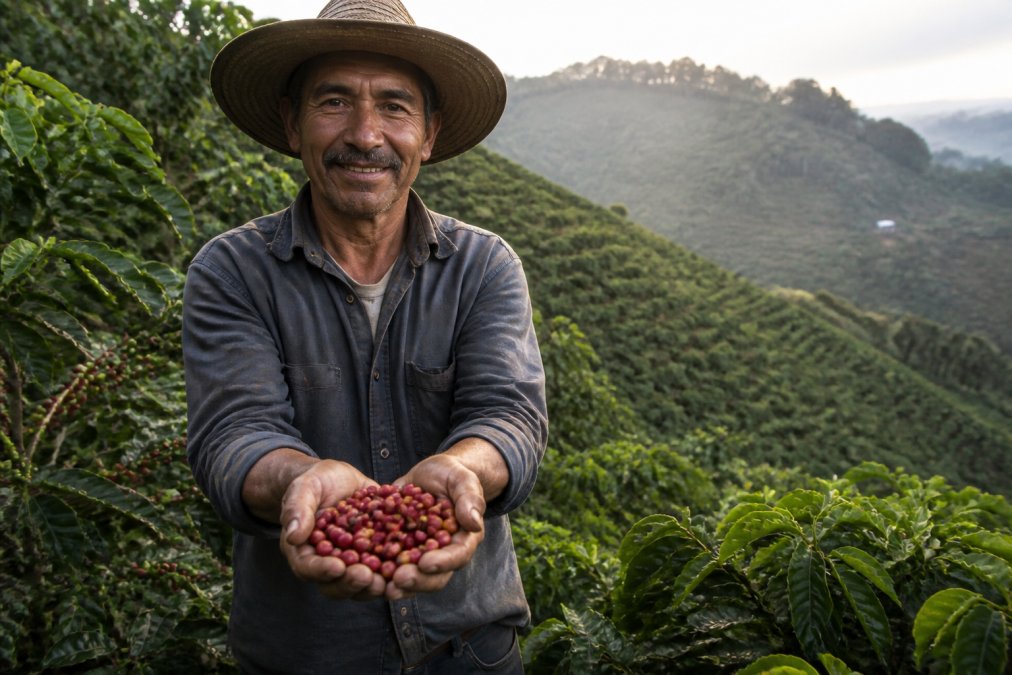
The direct trade coffee model follows a defined path from harvest to roaster, prioritizing transparency at every step. A roaster typically visits the farm, evaluates growing conditions, and agrees on a price based on quality, not the fluctuating commodity market.
Once harvested and processed, the coffee is exported and shipped to the roaster's facility. This is where the importer becomes critical, many roasters lack the logistics infrastructure for international shipping, customs, and warehousing, so they partner with importers who move coffee across borders while maintaining the direct relationship.
The roaster then samples the beans, profiles a roast, and eventually offers the coffee to customers. In a true direct trade arrangement, the roaster can name the specific farm, the farmer, and the price paid. That traceability is the defining feature of the model.
Fair Trade vs Direct Trade Coffee: What's the Difference?
The distinction between fair trade vs direct trade coffee comes down to certification versus relationship. Fair Trade is a third-party certification system with standards, audits, and seals that guarantee a minimum price to farmers, often working through cooperatives.
Direct trade, by contrast, has no formal certification body; it relies on the direct relationship between roaster and farmer to ensure fair compensation. This is both its greatest strength and its most significant weakness, claims are only as credible as the roaster making them.
Fair Trade guarantees a floor price, which protects farmers during market downturns. Direct trade typically pays more than that floor, but the amount is negotiated privately and varies widely. For farmers producing exceptional coffee, direct trade can be substantially more lucrative. For those producing average beans, Fair Trade's safety net may be more appropriate.
The Benefits of Direct Trade Coffee for Farmers and Roasters
The benefits of direct trade coffee extend well beyond the farm-gate price. For farmers, the model offers economic sustainability through predictable, long-term contracts that reduce exposure to market volatility, allowing them to invest in infrastructure and sustainable practices without fear of losing their buyer.
Roasters benefit equally, direct relationships grant access to the highest-quality beans before they reach the commodity market, and they allow roasters to tell an authentic sourcing story. In a crowded specialty market, that narrative is a genuine differentiator.
Financial Stability Through Price Premiums
Direct trade coffee often commands significant price premiums over commodity coffee. These premiums are negotiated based on cup quality, with farmers earning more when their beans score higher in cupping evaluations. The farm-gate price, what the farmer receives, is typically a multiple of the commodity rate, though the exact figure depends on the specific agreement.
Where the Money Actually Goes: A Price Breakdown
To understand why direct trade matters, it helps to see the numbers. In the commodity market, the C-price (the New York futures exchange rate) is the benchmark. When the C-price hovers around $1.50 per pound, a farmer might receive $1.50 to $1.80 per pound for their coffee, regardless of its quality. That coffee then moves through exporters, importers, and brokers, each taking a margin, before a roaster buys it.
In a direct trade arrangement, the economics shift. A roaster and farmer agree on an FOB (Free On Board) price, which is the price of the coffee once it is loaded onto a shipping vessel. That FOB price is typically a significant multiple of the C-price. For a coffee scoring 85+ points on the Specialty Coffee Association (SCA) cupping scale, an FOB price of $3.00 to $4.00 per pound is common, and for microlots with exceptional scores, prices can reach $5.00 or more.
The farm-gate price, what the farmer actually pockets, is lower than the FOB price because it excludes export fees, inland transportation, and the importer's margin. A typical breakdown might look like this:
- Farm-gate price: $2.50 per pound (what the farmer receives)
- Export and logistics fees: $0.40 per pound (milling, bagging, inland freight, documentation)
- Importer margin: $0.30 per pound (for financing, warehousing, and risk management)
- FOB price: $3.20 per pound (what the roaster pays the importer)
Compare that to commodity coffee, where the farm-gate price is often below the cost of production. According to industry analyses, the cost to produce a pound of coffee in Central America is frequently $1.40 to $1.80, meaning commodity farmers can lose money on every pound they sell. Direct trade's quality-based pricing is what makes the difference between subsistence and sustainability.
Quality Improvements Through Long-Term Relationships
Quality improves when farmers and roasters work together over multiple harvests. Roasters share feedback on flavor profiles, processing methods, and harvesting practices, helping farmers refine their techniques, a collaborative cycle that produces better coffee each season and rewards excellence rather than volume.
A concrete example: when a roaster cupping a farmer's coffee detects a fermenty, over-fermented note, they can trace it back to the washing station's fermentation time. The roaster shares that data with the farmer, who adjusts the process for the next lot. This kind of iterative feedback loop is impossible in the commodity market, where coffee is blended and anonymized before it ever reaches a roaster.
The Role of Importers and the Supply Chain
Importers play an essential but often misunderstood role in direct trade coffee. While the term suggests a two-party transaction, most arrangements involve a trusted importer who handles logistics, quality control, and financing, acting as facilitators, not middlemen in the traditional sense.
A reputable importer provides "relationship coffee" logistics: consolidating shipments from multiple farms, managing FOB price negotiations, handling customs documentation, and ensuring beans arrive in optimal condition. They also often front the cost of the coffee to the farmer, reducing risk for both parties.
The supply chain transparency that direct trade promises depends on every party sharing information openly. When an importer is involved, the roaster must ensure that the importer's practices align with their own ethical standards. The best importers publish their own transparency reports, showing exactly what they paid farmers versus what they charged roasters.
How to Verify Direct Trade Coffee Claims
Since direct trade coffee lacks third-party certification, consumers need a practical framework for evaluating claims. The most reliable signal is price transparency: does the roaster publicly state what they paid for the beans?
A credible roaster will name the farm, the farmer, and often the specific price paid per pound. Redemptive Coffee, for example, maintains direct trade partnerships with farmers like Diego Chavarria and Byron Corrales, and we publish origins and farm details for each offering. Our BRIDGE blend comes from Byron Corrales' Los Pinos farm in Nicaragua, while DREAM is sourced from Diego Chavarria's El Dorado farm.

The Consumer Verification Checklist
Look for these verification markers when evaluating any roaster:
- Named farms and farmers, not just a country of origin. If the bag says "Colombia" but no farm name, that's a red flag. A direct trade roaster should be able to tell you the specific producer, the farm's name, and the region.
- Published pricing information or transparency reports. Does the roaster disclose the FOB price or farm-gate price they paid? Some roasters publish annual transparency reports that list every coffee they bought and what they paid. This is the gold standard.
- Third-party documentation. Ask for contract receipts, visit photos, or cupping scores from the farm. A roaster who has actually visited will have photos and stories. A roaster who bought through an importer without visiting may not.
- Long-term relationships. Direct trade is not a one-off purchase. Look for roasters who have worked with the same farm for multiple harvest seasons. This signals commitment, not opportunism.
- Willingness to answer direct questions. Email the roaster. Ask: "Who grew this coffee? How much did you pay per pound? Did you visit the farm?" A genuine direct trade roaster will answer without hesitation. A vague or evasive response is a warning sign.
The Importer Test: What 'Direct' Really Means
One of the most misunderstood aspects of direct trade is the importer's role. Many consumers assume that if an importer is involved, the coffee is not truly "direct." That assumption is wrong.
Most specialty roasters, even those who pioneered direct trade, use specialized importers to handle logistics. Importers manage customs, consolidate shipments, arrange ocean freight, and often provide financing to farmers before the harvest is sold. This is not a violation of direct trade principles; it is a practical necessity for moving coffee across borders.
The key question is not whether an importer is involved, but whether the roaster has a direct relationship with the farmer independent of the importer. A roaster who has visited the farm, negotiated the price directly with the farmer, and maintains ongoing communication is practicing direct trade, even if an importer handles the shipping.
To test this, ask the roaster: "Do you know the farmer's name? Have you met them? Who set the price, you or the importer?" If the roaster can answer all three with specificity, the coffee is likely direct trade, regardless of the importer's involvement. If the roaster cannot name the farmer or claims the importer handled everything, the coffee is better described as "relationship coffee" purchased through a supply chain, not direct trade.
Challenges and Limitations of the Direct Trade Model
Direct trade coffee is not a perfect system, and honest roasters acknowledge its limitations. The most significant challenge is scalability, building and maintaining direct relationships requires time, travel, and resources that many roasters cannot sustain as they grow, which is why some large roasters use the term loosely.
The absence of third-party certification creates a verification gap that some companies exploit. Without an independent audit, consumers must trust the roaster's word, which has led to skepticism about the term's meaning. The Specialty Coffee Association's research on sustainability has explored how vague sourcing claims can undermine consumer confidence in ethical coffee.
Market volatility also poses risks. When commodity prices spike, fixed premiums in direct trade agreements may become less competitive, tempting farmers to sell to the highest bidder. Long-term contracts help mitigate this but cannot eliminate it entirely.
Environmental impact metrics are another gap. While direct trade often encourages sustainable agriculture through quality incentives, it does not formally require environmental certification, without third-party verification, sustainability claims remain anecdotal.
Conclusion: Is Direct Trade Coffee Worth It?
Direct trade coffee sourcing represents a genuine improvement over conventional commodity purchasing, but its value depends entirely on execution. Done properly, it delivers higher prices to farmers, better quality to consumers, and a transparent supply chain that builds trust.
The trade-offs are real: direct trade requires more effort to verify, costs more than grocery store coffee, and depends on the integrity of individual roasters. For consumers who value knowing exactly where their coffee comes from, those trade-offs are worth accepting.
At Redemptive Coffee, we've built our sourcing model around direct trade relationships because we believe the connection between farmer and roaster produces better coffee and a better outcome for everyone. Our small-batch, roasted-to-order approach means every bag supports fair prices for farmers and funds our community work.
When you choose direct trade coffee, you're voting for a system that rewards quality and human dignity over commodity efficiency. You're also getting a better cup of coffee in the process. Explore our BRIDGE, DREAM, and RISE offerings to taste the difference a direct relationship makes.


Choosing coffee that claims ethical sourcing without proof is a gamble. Direct trade coffee offers a path to genuine supply chain transparency, but only when roasters back their words with named farms and published prices. Redemptive Coffee maintains direct relationships with farmers like Diego Chavarria, Byron Corrales, and the Blossom Creek Co-op, ensuring fair compensation and exceptional quality in every batch. Our small-batch, roasted-to-order model delivers freshly roasted beans to your door while funding community work. Get started with Redemptive Coffee and taste coffee that makes a measurable difference.
Frequently Asked Questions
What does direct trade mean in coffee?
Direct trade is a sourcing model where roasters buy green coffee beans directly from the farmers who grow them, bypassing traditional middlemen and commodity markets. Roasters typically visit farms, build long-term relationships, and pay price premiums above the commodity rate based on quality. Unlike fair trade, direct trade has no formal third-party certification. Instead, roasters establish their own standards for transparency, quality, and fair compensation, often publishing what they pay to demonstrate their commitment.
How does direct trade differ from Fair Trade certification?
Fair trade uses third-party certification with a minimum price floor and social development premiums, but farmers often sell through large cooperatives. Direct trade coffee involves roasters working directly with specific farms, paying based on cup quality rather than a fixed minimum. Direct trade offers higher premiums for exceptional beans and fosters stronger relationships, but it lacks formal oversight. Fair trade guarantees a baseline, while direct trade rewards excellence and transparency.
How can consumers verify if a coffee brand is truly direct trade?
Look for roasters who name their farm partners and share what they pay. A credible direct trade roaster will publish FOB prices or farm-gate prices, share visit photos, and explain their relationship length. Ask questions: Does the roaster visit farms regularly? Do they pay above the commodity market price? Do they work with the same farms year after year? Be wary of vague terms like 'ethically sourced' without specifics. Genuine direct trade requires a roaster-farmer relationship you can trace, not just a marketing label.
Is direct trade coffee always organic?
No, direct trade coffee is not automatically organic. Direct trade focuses on the economic relationship between roaster and farmer, not agricultural practices. However, many direct trade farmers do use organic methods because they often yield higher-quality beans, and roasters seeking exceptional cup scores favor these practices. Some direct trade farms hold organic certification; others simply follow traditional methods without the paperwork. If organic certification matters to you, ask the roaster specifically. Direct trade guarantees fairer compensation, but you should verify growing practices separately.